How to explore a word's meanings with its Vocabulary card
The Mind card in Vocabulary lists several translations and meanings. That makes sense: mind can be a noun or a verb, and fixed expressions need to be understood as a whole.
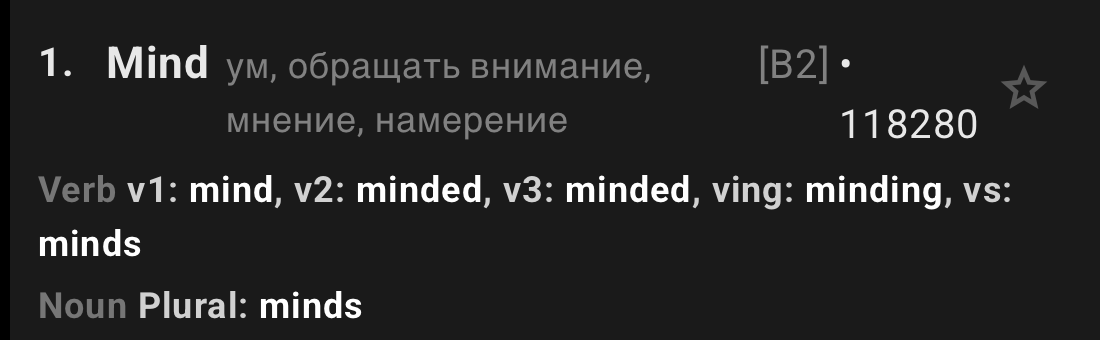
Start with Common collocations. The mind card includes:
- state of mind — a person's mental or emotional state;
- mind your manners — behave politely;
- make up your mind — decide.
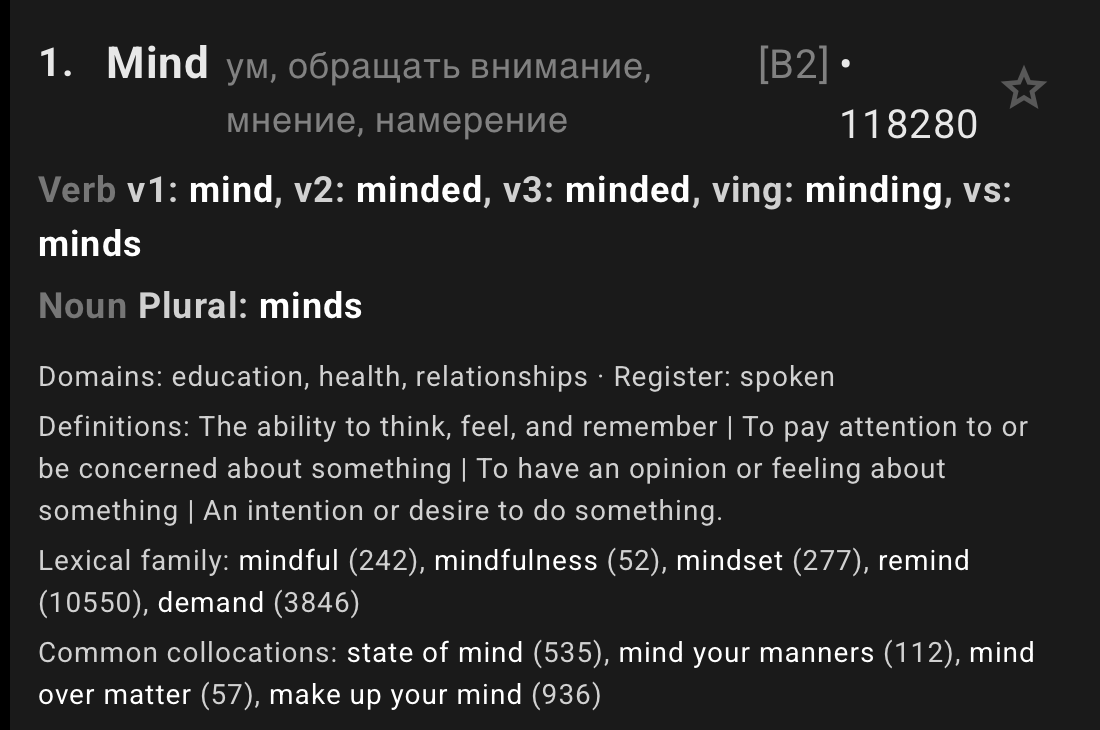
Click a combination to search for it. Results for mind your manners include Hey, you better mind your manners from Star Trek (2009). Someone is being told to behave. The noun meaning of mind as the thinking part of a person would not explain this line.
Return to the card and open another combination. This takes you from a general list of meanings to a specific use with video examples.
When to use the other fields
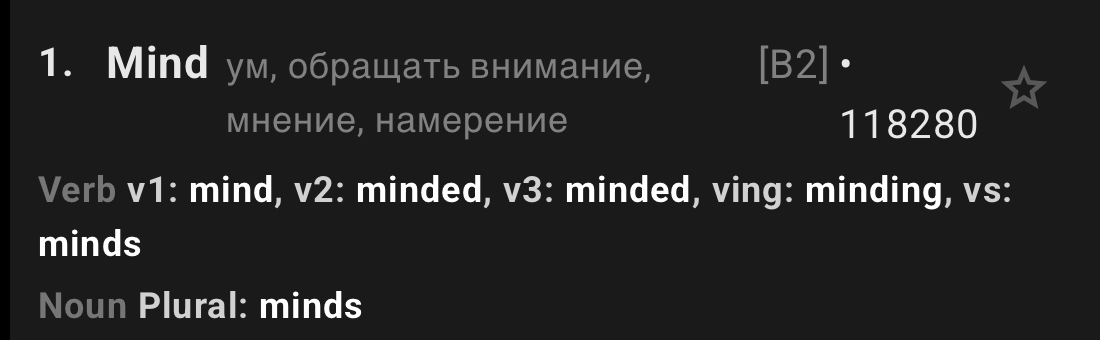
Definitions helps when a short translation does not explain the meaning. Verb and Noun show word forms, including minded, minding, and minds. These forms are links to searches.
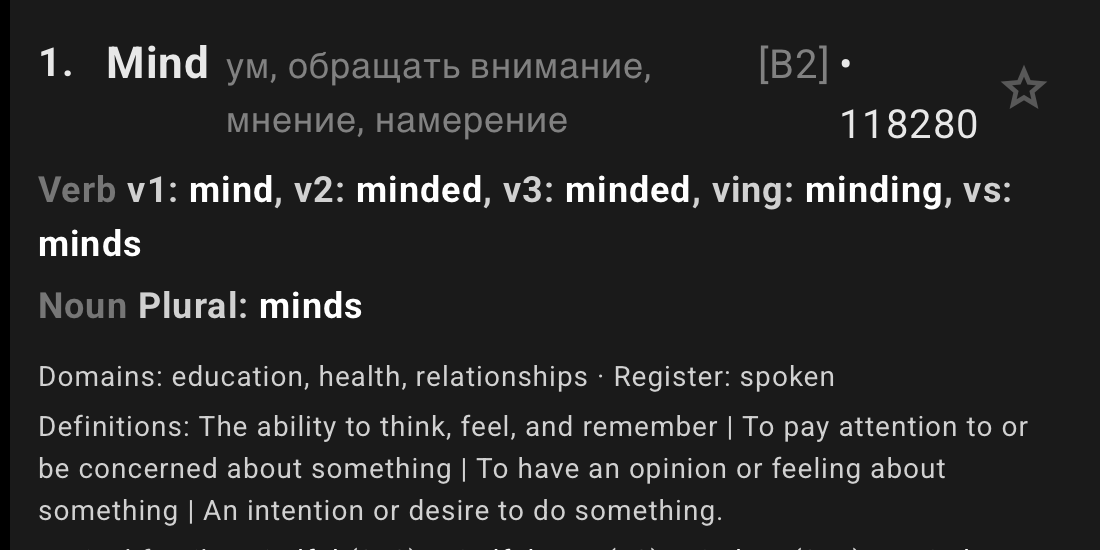
There is no need to open everything in order. Start with the question raised by a line: which meaning fits, why the word has that form, or which words go with it. Then open the relevant combination or form and listen to examples.
If a whole expression caused the difficulty, save that expression for review. An entry for mind your manners in Favorites will bring you back to this use next time.